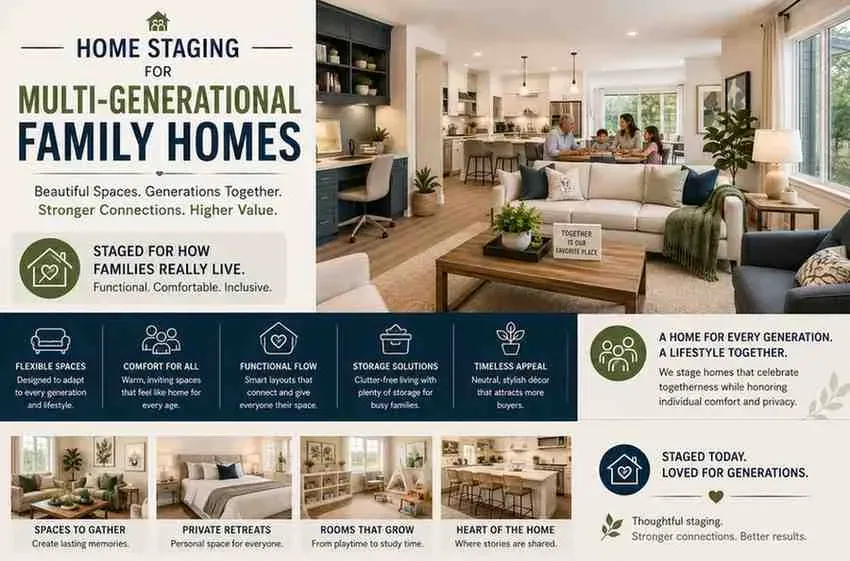
Multi-generational family homes serve households with different ages, routines, and living preferences under one roof. These properties often include flexible layouts, additional bedrooms, private living areas, and shared gathering spaces that appeal to a broad range of buyers. Thoughtful staging helps each area demonstrate a clear purpose while maintaining a cohesive appearance throughout the home. When every room reflects comfort, functionality, and visual balance, buyers can easily appreciate how the property supports both privacy and togetherness without sacrificing style or practicality.
Many buyers seek homes that adapt to changing family needs. A property designed for multiple generations offers flexibility for parents, adult children, grandparents, guests, or caregivers while providing comfortable shared spaces.
Moreover, these homes often feature additional bedrooms, separate entrances, finished basements, or private suites that increase long-term usability.
However, buyers should immediately recognize these advantages through thoughtful staging rather than relying solely on floor plans.
Consequently, every room should communicate its purpose while contributing to the home’s overall sense of harmony.
Create a Strong First Impression
A welcoming entrance establishes positive expectations before buyers view the rest of the property.
Prepare the entry by focusing on:
- Spotless flooring
- Fresh neutral paint
- Bright lighting
- Organized storage
- Healthy indoor plants
- Clean windows
- Minimal decorative accessories
- Well-maintained hardware
Furthermore, remove unnecessary furniture that limits movement.
An uncluttered entrance immediately creates a sense of spaciousness while encouraging buyers to continue comfortably through the home.
Highlight Flexible Living Spaces
One of the greatest strengths of a multi-generational home is versatility.
Each room should clearly demonstrate how it can support different lifestyles without appearing overly specialized.
Define Every Room Clearly
Avoid leaving rooms without an obvious purpose.
Instead, stage spaces as:
- Guest bedroom
- Home office
- Reading room
- Family lounge
- Hobby room
- Children’s study area
Moreover, simple furniture arrangements help buyers recognize each room’s potential while imagining their own needs.
Avoid Conflicting Functions
Do not combine several unrelated purposes within one room.
For example, avoid placing exercise equipment beside formal office furniture or children’s toys inside a guest bedroom.
Clear room definitions improve buyer confidence and make the home’s layout easier to appreciate.
Create Comfortable Shared Areas
Shared spaces encourage family interaction while maintaining comfort for different age groups.
Arrange living rooms with:
- Comfortable sofas
- Accent chairs
- Coffee tables
- Side tables
- Soft lighting
Furthermore, preserve generous walking paths between furniture.
Balanced layouts help buyers appreciate both conversation areas and open circulation.
Use Neutral Colors Throughout the Home
Neutral colors appeal to a broad audience while creating visual continuity between rooms.
Consider using:
- Soft white
- Warm beige
- Light gray
- Taupe
- Natural wood finishes
- Charcoal accents
However, introduce subtle personality through cushions, artwork, or decorative accessories instead of bold wall colors.
Balanced color schemes allow buyers to focus on the home’s architecture and functionality.
Make Bedrooms Feel Comfortable and Private
Bedrooms should communicate relaxation while respecting privacy.
Prepare every bedroom by including:
- Crisp bedding
- Coordinated pillows
- Bedside lamps
- Neutral artwork
Moreover, remove unnecessary furniture that reduces usable floor space.
Well-arranged bedrooms appear larger while helping buyers imagine comfortable daily living.
Present Additional Living Suites Effectively
Many multi-generational homes include independent living areas.
These spaces deserve the same attention as primary rooms.
Stage secondary suites with:
- Comfortable seating
- Functional dining area
- Neutral décor
- Simple artwork
Consequently, buyers immediately recognize the value of separate living accommodations without feeling that the property appears divided.
Maintain Smooth Traffic Flow
Every family member should move comfortably throughout the home.
Maintain open pathways around:
- Living rooms
- Dining spaces
- Hallways
- Kitchens
- Staircases
Furthermore, remove oversized furniture that interrupts circulation.
Comfortable movement improves buyer perception while emphasizing spacious layouts.
Coordinate Design Across Every Level
Consistency creates visual harmony throughout larger homes.
Repeat design elements, including:
- Flooring tones
- Decorative finishes
- Lighting styles
- Hardware finishes
- Accent colors
Moreover, allow each level to reflect the same overall style while introducing subtle variations in texture or furnishings.
Unified presentation strengthens the property’s overall appeal.
Use Lighting to Brighten Every Space
Lighting significantly influences buyer impressions.
Layer several light sources rather than depending entirely on ceiling fixtures.
Include:
- Recessed lighting
- Table lamps
- Floor lamps
- Wall sconces
- Natural daylight
Additionally, clean every window before photography and property showings.
Bright interiors appear larger, fresher, and more welcoming.
Design Functional Dining Areas
Dining spaces often become the heart of multi-generational homes because they bring family members together for meals, celebrations, and conversations. Proper staging should emphasize comfort while allowing buyers to imagine gatherings of different sizes.
Keep the Table Simple
An elegant yet understated table setting creates a welcoming atmosphere.
Consider including:
- Neutral dinnerware
- Linen napkins
- Glassware
- A small floral centerpiece
- Simple serving pieces
Moreover, avoid elaborate decorations that reduce usable table space. Clean, balanced arrangements help buyers focus on the room itself.
Allow Comfortable Movement
Dining chairs should remain evenly spaced, leaving enough room for people to move freely around the table.
Furthermore, remove unnecessary furniture from the room to preserve an open layout. Spacious dining areas appeal to families who value shared meals and entertaining.
Stage the Kitchen for Everyday Living
The kitchen should demonstrate efficiency, organization, and flexibility.
Clear countertops by storing small appliances out of sight.
Display only a few tasteful items such as:
- Fresh fruit
- Wooden cutting board
- Ceramic bowls
- Small herb planters
- Neutral serving trays
Consequently, the kitchen feels larger and easier to maintain while highlighting available workspace.
Organized cabinets and pantry shelves also reinforce the impression of abundant storage.
Present Bathrooms with Care
Bathrooms should reflect cleanliness and comfort for every generation.
Prepare each bathroom by:
- Polishing mirrors
- Folding fresh towels
- Cleaning grout
- Removing personal toiletries
- Organizing cabinets
- Replacing worn bath mats
Moreover, keep countertops free from clutter.
A bright, fresh bathroom reassures buyers that the home has received consistent care.
Highlight Storage Throughout the Home
Storage plays a significant role in multi-generational living.
Families often require additional space for clothing, seasonal items, household supplies, and personal belongings.
Organize:
- Bedroom closets
- Linen cabinets
- Pantry shelves
- Laundry rooms
- Utility storage
- Entry closets
Leave visible open space wherever possible.
Consequently, buyers perceive greater storage capacity and improved organization.
Use Decorative Accessories Sparingly
Accessories should enhance the home’s appearance without creating distractions.
Choose only a few tasteful items such as:
- Decorative bowls
- Green plants
- Sculptural vases
- Soft textiles
However, avoid displaying large personal collections or excessive seasonal decorations.
Simple styling appeals to a wider range of buyers while maintaining a polished appearance.
Reduce Personal Belongings
Personal items can make it difficult for buyers to picture themselves living in the property.
Remove:
- Family photographs
- Children’s artwork
- Personal collections
- Awards
- Religious displays
- Personalized décor
Instead, create neutral spaces that encourage buyers to imagine their own lifestyle within the home.
Prepare Every Bedroom for Different Uses
Not every buyer requires identical room arrangements.
Stage spare bedrooms as flexible spaces that could function as:
- Guest room
- Home office
- Study
- Nursery
- Hobby room
Consequently, buyers appreciate the home’s adaptability without feeling restricted by highly specialized layouts.
Create Inviting Outdoor Areas
Outdoor spaces often support family gatherings and relaxation.
Prepare patios, decks, or gardens by including:
- Outdoor dining table
- Healthy plants
- Neutral cushions
- Simple decorative accents
Furthermore, remove unnecessary storage items and damaged furniture before every showing.
A well-maintained outdoor area strengthens the property’s overall appeal.
Keep Design Timeless
Timeless interiors continue attracting buyers because they suit many decorating preferences.
Focus on:
- Neutral colors
- Quality furniture
- Classic lighting
- Durable materials
- Balanced room layouts
Moreover, avoid highly fashionable decorating themes that may quickly become outdated.
Some homeowners researching staging services in Toronto also seek practical information about presenting larger family homes, making neutral design choices especially helpful when preparing a property for sale.
Avoid Common Staging Mistakes
Even well-designed multi-generational homes can lose buyer interest when presentation feels disorganized. Small details often influence first impressions more than expected. Therefore, careful preparation should extend to every room.
Avoid these common mistakes:
- Overcrowded furniture
- Conflicting room purposes
- Personal photographs
- Excess decorative accessories
- Dark hallways
- Cluttered storage
- Worn rugs
- Strong odors
- Poor lighting
- Blocked walkways
Moreover, inspect the property before every showing to ensure each space reflects comfort, cleanliness, and thoughtful organization.
Prepare the Entire Home Before Every Showing
A consistent presentation strengthens buyer confidence from the entrance to the final room.
Complete this checklist before visitors arrive:
- Turn on interior lighting.
- Open curtains and blinds.
- Vacuum carpets and flooring.
- Wipe countertops.
- Straighten furniture.
- Arrange cushions neatly.
- Empty waste bins.
- Water indoor plants if needed.
- Polish mirrors.
- Check room temperature.
These simple steps help the property feel fresh, bright, and ready for viewing.
Create a Lifestyle Buyers Can Imagine
Successful staging goes beyond attractive furniture. It allows buyers to picture daily life within the home while appreciating the flexibility of the layout.
Arrange gathering spaces to encourage conversation, prepare bedrooms with clear purposes, and maintain organized storage throughout the property. Furthermore, ensure every room contributes to a cohesive design that balances privacy with shared family living.
When buyers can easily visualize comfortable routines for every generation, the home becomes more memorable and emotionally appealing.
Conclusion
Thoughtful staging helps multi-generational homes showcase flexibility, comfort, and practical living without sacrificing style. Clearly defined rooms, coordinated décor, organized storage, and balanced layouts create an inviting environment that appeals to a broad range of buyers. Moreover, a consistent presentation throughout the property highlights its adaptability while allowing every generation to imagine living comfortably under one roof. Careful preparation transforms functional spaces into welcoming living areas that leave a lasting impression.
FAQs
1. Why is staging important for multi-generational family homes?
Staging highlights the home’s flexibility by giving each room a clear purpose. Buyers can more easily appreciate how shared spaces and private areas work together, making the property feel practical, organized, and comfortable for different household arrangements.
2. How should shared living spaces be arranged?
Arrange seating to encourage conversation while maintaining open walkways. Comfortable furniture, balanced spacing, and neutral décor help create welcoming gathering areas that support daily family interaction without making the room appear crowded.
3. What colors work best when staging larger family homes?
Neutral shades such as white, beige, gray, taupe, and natural wood tones appeal to the widest audience. These colors brighten interiors, create visual continuity, and allow buyers to focus on the home’s layout instead of bold decorating choices.
4. Should every bedroom have a specific purpose?
Yes. Buyers respond more positively when every bedroom clearly demonstrates its intended use. Guest rooms, children’s rooms, home offices, or hobby spaces help buyers appreciate the home’s flexibility without creating confusion.
5. How important is storage in multi-generational homes?
Storage remains one of the most valuable features because larger households often require additional organization. Clean, organized closets and cabinets with visible open space help buyers recognize generous storage capacity throughout the property.
6. What personal items should be removed before showings?
Remove family photographs, personalized decorations, awards, children’s artwork, collectibles, and seasonal displays. Neutral spaces help buyers imagine their own belongings while creating a more universally appealing environment.
7. How should outdoor areas be staged?
Outdoor spaces should feel comfortable and functional. Arrange seating, maintain healthy landscaping, clean surfaces, and remove unnecessary clutter. A welcoming patio or garden reinforces the home’s ability to accommodate family gatherings and relaxation.
8. What is the biggest staging mistake in larger homes?
Giving rooms multiple unrelated purposes often creates confusion. Clearly defined spaces allow buyers to appreciate the home’s layout while recognizing how each area contributes to comfortable everyday living.
9. Why does lighting matter during home staging?
Bright interiors feel cleaner, larger, and more inviting. Layered lighting combined with natural daylight highlights architectural features while improving the atmosphere throughout every room during photography and property viewings.
10. How can thoughtful staging improve buyer interest?
Thoughtful staging creates an organized, welcoming environment that highlights flexibility, comfort, and functionality. Buyers can more easily picture daily routines, family gatherings, and future possibilities, helping the property leave a stronger and more memorable impression.